Why Swedish founders get burned by “available” brand names: company name, domain and trademark are not the same thing
You can register a company name, buy the domain, build the website, order packaging, and launch ads, and still be told to stop using the brand.
That usually happens because founders treat three separate checks as if they were one:
company name registration
domain availability
trademark clearance
In Sweden, they are not the same thing. Each solves a different problem. If you only check one, you may still face a rebrand, wasted marketing spend, filing refusals, or conflict with an earlier rights holder.
This matters even more if you plan to expand beyond Sweden. A name that looks clear locally can still run into trouble at EU level.
The launch risk is simple: “available” does not mean safe to build on
A founder often sees three green lights and assumes the name is fine:
Bolagsverket (the Swedish Companies Registration Office) accepts the company name
the .se or .com domain is free
social handles are available
But none of that confirms that the brand is clear from trademark risk.
PRV’s own guidance makes clear that company names, trademarks, and domain names are different rights. EUIPO also warns that availability analysis is more nuanced than checking whether an identical mark is already on the register.
The business consequence is straightforward: you can invest in brand assets before you have checked the one issue that most often causes expensive conflict.
Why this matters before design, SEO, and paid acquisition
The earlier you discover a name problem, the cheaper it usually is to fix.
The later you discover it, the more costs pile up:
new logo and visual identity work
new domain and email migration
reworked packaging and app store assets
lost SEO value and broken backlinks
paused paid campaigns
customer confusion
delayed fundraising or market entry
For many teams, the real damage is not the filing fee. It is rebuilding momentum after launch materials are already live.
This is also why timing matters in first-to-file markets. In much of Europe, filing date can heavily influence who gets registration rights. If you want more background on that point, see our articles on first-to-file trademark strategy and international filing.

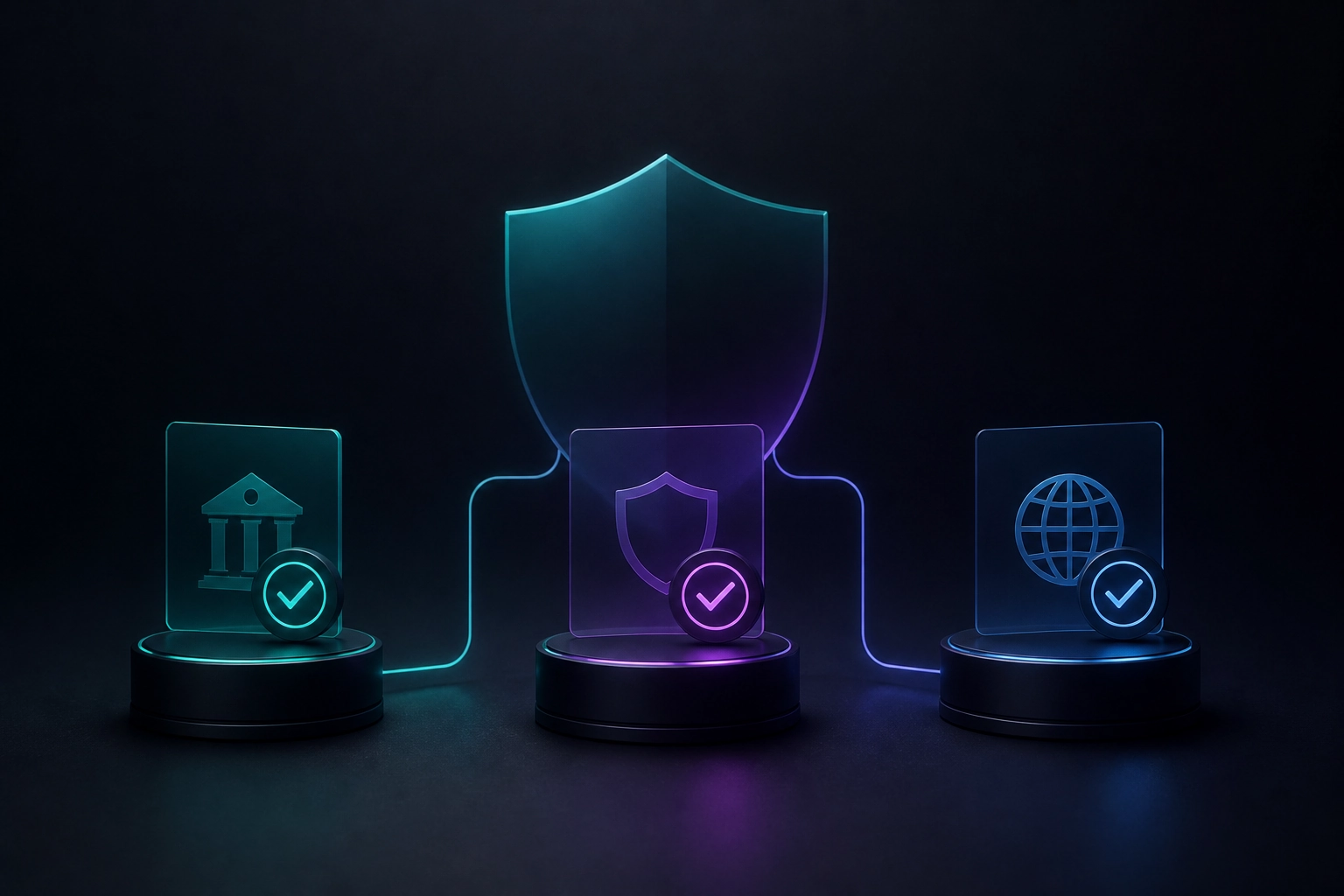
A registered company name, a trademark, and a domain solve three different problems
Here is the practical difference.
What you have | What it usually does | What it does not do on its own |
|---|---|---|
Registered company name | Identifies your legal entity or business name in the company register | Does not automatically give the same protection as a trademark for branding your goods or services |
Registered trademark | Protects a brand sign used to distinguish goods or services, such as a name or logo | Does not automatically give you every domain or social handle |
Registered domain | Gives you control of a web address for as long as you keep the registration | Does not confirm that the brand is clear from trademark conflicts |
A company name registration is not the same as trademark protection
A company name registration through Bolagsverket is about your business name in the company register. It helps identify the business entity operating under that name.
That can create useful rights, but it is not the same as a trademark registration.
A trademark is the right most directly tied to branding goods and services in the market. It is what businesses usually rely on when they want to stop others from using a confusingly similar brand name for similar commercial activity.
In plain English:
a company name tells the market who the business is
a trademark helps protect the brand under which products or services are sold
You may have a registered company name and still face problems if someone else has an earlier trademark covering similar goods or services.
You can review PRV’s general trademark guidance here: PRV trademarks.
A domain registration is only a web address, not a legal clearance result
Buying a domain means the address was available to register at that moment. It does not mean the underlying brand name is legally safe.
Domain registries generally do not conduct a full trademark conflict analysis for you.
So if yourbrand.se is free, that only answers one narrow question: can you register that address now?
It does not answer harder questions such as:
Is there an earlier Swedish trademark for a similar name?
Is there an EU trademark that covers Sweden?
Is there an earlier company name or market use in the same sector that may cause conflict?
Will your own trademark application be refused or opposed?
This is why “the domain was free” is one of the weakest reasons to conclude a brand is safe to launch.
A trademark is the rights layer most founders actually need for brand protection
A trademark protects the sign customers use to recognize your goods or services. That may be a word, logo, slogan, or another identifier.
For founders, the commercial value is practical:
it can strengthen ownership of the brand you are investing in
it can improve your position if someone launches a confusingly similar name
it can support expansion, licensing, distribution, and fundraising
it can reduce the risk of discovering a conflict after launch
It is also the layer investors, acquirers, marketplaces, and in-house legal teams often look for when assessing whether a brand is actually protectable.
That does not mean registration guarantees a perfect outcome. Trademark risk always depends on facts such as similarity, goods and services, geography, and earlier rights. But it is usually the right place to focus before committing to a name.
Example: why all three checks can point in different directions
Imagine a Stockholm startup wants to launch software under the name “Northlane Studio.”
Bolagsverket accepts Northlane Studio AB
northlanestudio.se is available
Instagram and LinkedIn handles are free
The team assumes the name is ready.
But a clearance search then finds an earlier EU trademark for NORTHLANE covering similar software services.
Now the company has a problem. The company name registration and free domain did not remove trademark risk. If the startup launches anyway, it may face:
a trademark objection or opposition
a cease-and-desist letter
pressure to rebrand after spending on design and marketing
difficulty expanding outside Sweden
This is the core point: the checks answer different questions, so they can produce different answers.
What founders should understand before choosing a brand name in Sweden
A sensible naming process should treat company names, trademarks, and domains as three separate workstreams.
Use this rule of thumb:
Check the company name so you can register the business.
Check the domain so you can control the web address.
Check trademarks so you understand whether the brand itself is likely to create legal and commercial risk.
If you only do the first two, you may still be building on a weak foundation.
A practical 7-step clearance workflow before launch
Before you approve naming, brand design, SEO pages, or launch assets, run a structured review.
Define exactly what you want to protect.
Is the key asset the word mark, the logo, or both? Most early-stage risk sits in the name itself.
List the goods and services you will actually sell.
Trademark conflicts are assessed in relation to specific commercial categories. A name clear for consulting may not be clear for cosmetics or SaaS.
Check company name availability.
Use this to answer the company registration question, not the trademark question.
Search Swedish trademarks through PRV.
Look for identical and similar marks, not just exact matches.
Search EU and wider European records through TMview and EUIPO.
An EU trademark can affect Sweden, so a Sweden-only search is often not enough.
Check domains, social handles, app stores, and visible market use.
This helps with brand operations, but it can also reveal practical conflict risk not obvious from register searches alone.
Make the filing decision before full launch spend.
Decide whether to file in Sweden first or go directly for an EU trademark before you lock in packaging, ad creative, and sales rollout.
If the name is important enough to build a business on, it is important enough to clear properly.
When filing in Sweden first may make sense
A Swedish filing may be a sensible first step if:
your launch is genuinely Sweden-first
your budget is limited and expansion plans are still uncertain
you want to test the brand before broader rollout
your commercial activity is likely to stay local in the near term
This can be a pragmatic option for early validation. But it should be matched to the actual growth plan, not just the current website language.
When going straight to an EU trademark may be smarter
An EU trademark may be the better route if:
you plan to sell across multiple EU markets soon
your product is digital and available cross-border from day one
you are already speaking with distributors, investors, or partners outside Sweden
you want one filing that covers a wider commercial footprint
The trade-off is that an EU application can be affected by earlier rights anywhere in the EU. That wider reach is commercially useful, but it also makes clearance more important before filing. At the same time, the EUIPO, as opposed to Swedish PRV, does not make conflict checks, meaning that it, counter-intuitively, might be even easier to get the trademark registered than in Sweden alone.
Practical questions to ask before you approve the name
If we spend six months building this brand, what happens if someone objects?
Are we checking only exact matches, or also similar names that customers may confuse?
Are we clearing the name only for Sweden, or for where the business is likely to go next?
Are our goods and services described correctly for trademark purposes?
Would a forced domain or brand change disrupt sales, SEO, or fundraising?
If those questions feel difficult to answer, that is usually a sign the brand has not been cleared deeply enough yet.
The commercial takeaway
A registered company name means you have registered the business name.
A registered domain means you control the web address.
A trademark is what most directly protects the brand in the market.
Those are related assets, but they are not interchangeable.
For Swedish founders, the safest habit is simple: do not treat company name approval or domain availability as proof that the brand is clear. Check all three, and make the trademark decision before the expensive parts of launch begin.
Checklist and short disclaimer
Before launch, make sure you have covered:
PRV trademark search
EUIPO and TMview search
company name check
domain availability check
social handle scan
goods and services planning
conflict review and filing route decision
This article is for informational purposes only and does not constitute legal advice. Trademark outcomes depend on the facts of each case, including the name, the goods or services, earlier rights, and the markets involved. If you want help reviewing a brand name before launch or deciding between a Swedish and EU filing strategy, Abrande can help.